
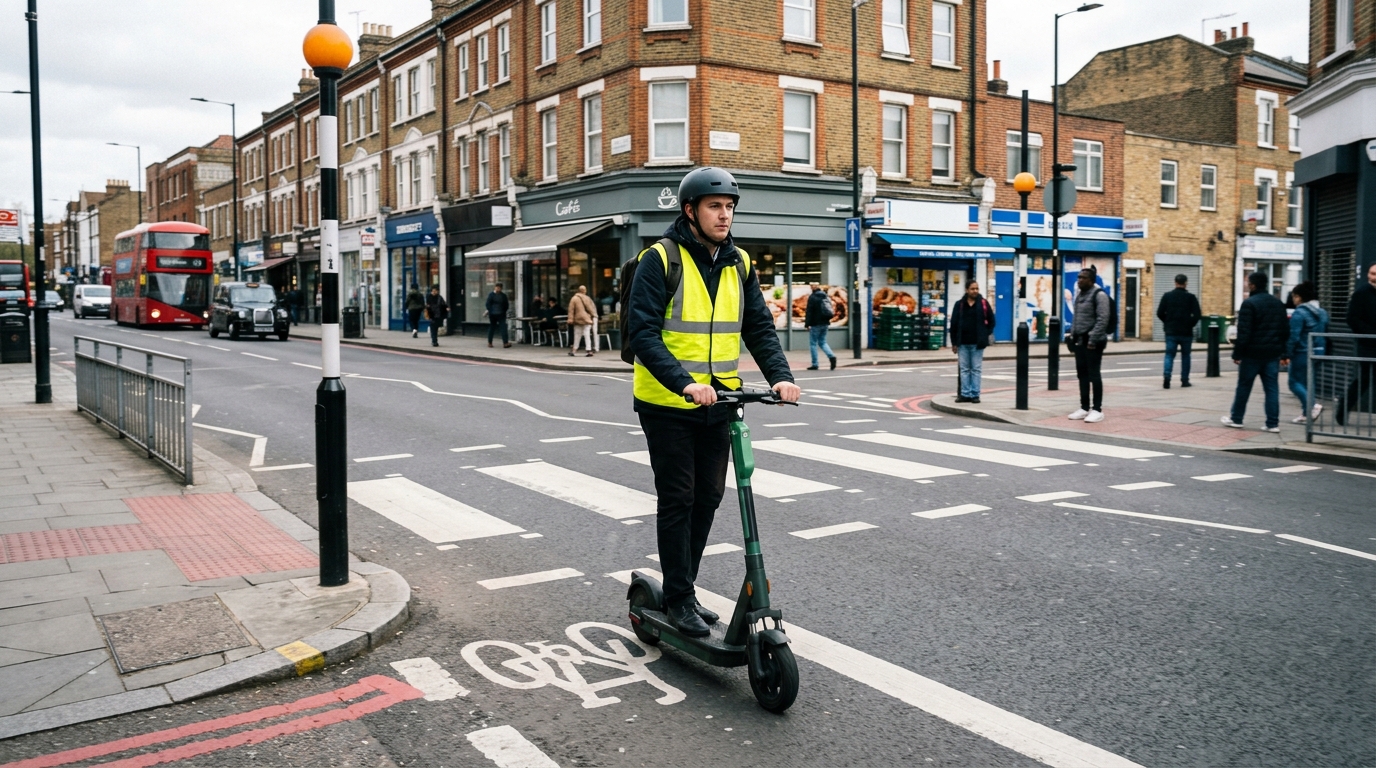
An e-scooter collision can leave a rider, pedestrian, cyclist or motorist with painful injuries and difficult questions about responsibility. The claim route may depend on whether the scooter was part of an authorised rental trial, privately owned, poorly maintained or involved in a collision with another road user. An e-scooter accident claim is not automatic, but compensation may be possible where another person or organisation caused or contributed to the injury.
Final Department for Transport data recorded 1,377 reported e-scooter collisions and 1,477 casualties in Great Britain during 2025. This was higher than the 1,312 collisions and 1,390 casualties recorded for 2024. Read the Department for Transport e-scooter casualty factsheet for full context and data limitations.
Why e-scooter accidents need careful investigation
An e-scooter can be difficult for other road users to see, and riders do not have the physical protection of a car. The 2025 data includes serious head injuries and fractures among reported casualties. However, the cause of any individual collision is never established by statistics alone.
Liability can involve several factors. A driver may have failed to look properly, a rider may have lost control, or the road surface and visibility may have created a hazard. The scooter itself could also be relevant if there is evidence of a mechanical fault or poor maintenance. A proper investigation looks at the location, behaviour of everyone involved, condition of the vehicle or scooter, and available evidence.
Private and rental e-scooter rules
A person injured by an e-scooter or while riding one should obtain advice based on the individual facts rather than assume a claim will succeed or fail because of the scooter type.
Rental e-scooters in trial areas
Government rental e-scooter trials operate in specified areas. Under current Department for Transport guidance, a rental e-scooter may be used on the road, except motorways, and in cycle lanes within an official trial area. It must not be used on the pavement. The rental operator provides third-party motor insurance.
This can be important after a collision. If a rental scooter was involved, record the operator’s name, the scooter identification number and any ride-app details. The operator may also hold useful information about the journey, the vehicle and its maintenance. That information may be relevant, but it does not establish liability by itself.
Private e-scooters on public land
Privately owned e-scooters are treated differently. It is against the law to use one on public land, except in limited circumstances. This may lead to enforcement consequences for the rider, but it does not automatically decide a civil compensation claim. A court or insurer will still consider the circumstances of the accident, including each person’s actions, causation and the injuries suffered.
Who may be responsible for a crash
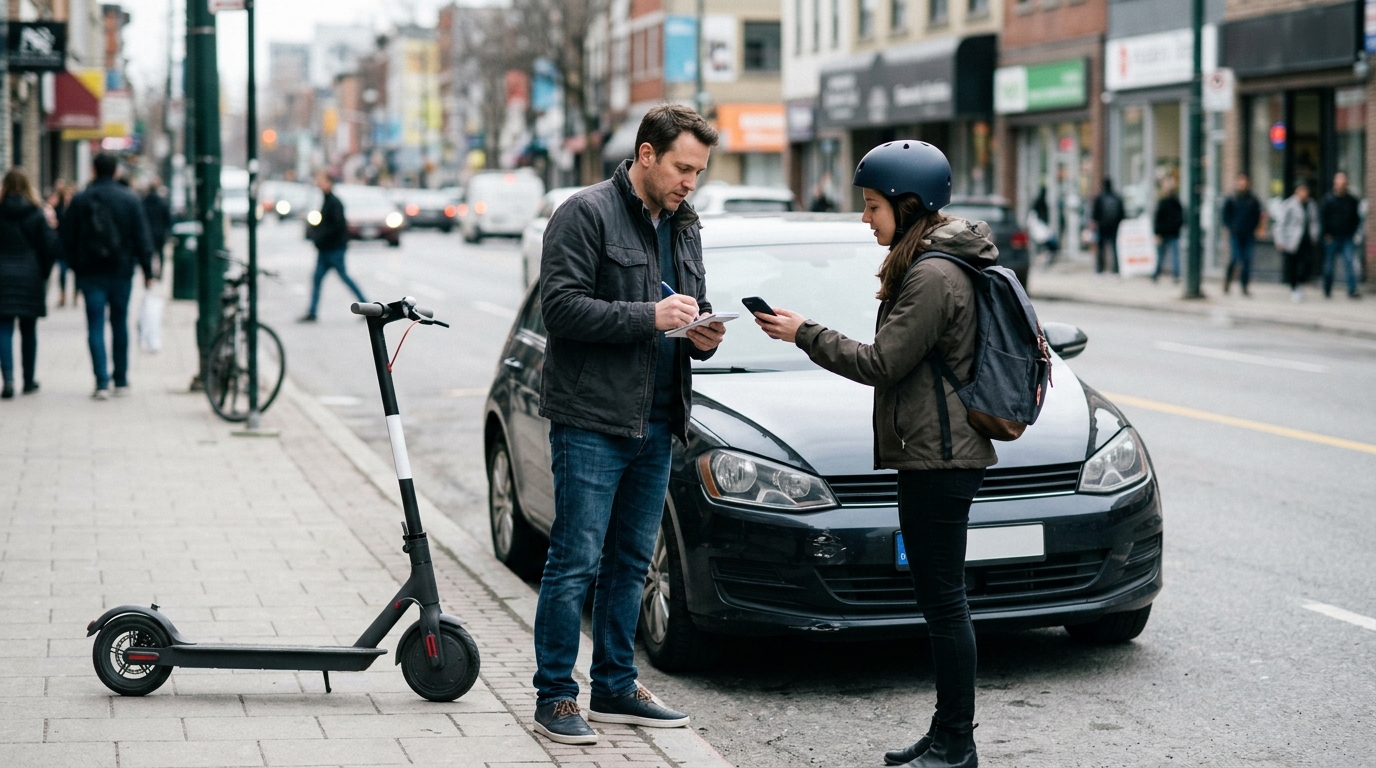
Responsibility may rest with one party or be shared between several parties. Evidence is especially important where the accounts of the incident differ.
Drivers, riders and road conditions
A driver could be responsible if they were speeding, distracted, failed to give way or did not keep a proper lookout. An e-scooter rider may be responsible for a collision with a pedestrian, cyclist or vehicle if their riding fell below the required standard of care. In some cases, a road defect, unsafe layout, missing signage or poor lighting could also be relevant.
Our UK road safety strategy guide explains why photographs, dashcam recordings and other digital evidence are increasingly important in road-accident investigations.
Rental operators and faulty equipment
A rental operator may need to be considered where a scooter was not properly maintained or where a defect is suspected. A fault does not necessarily make the operator responsible, and expert evidence may be needed. Keep the scooter details and report the issue through the operator’s app or customer service channel as soon as possible.
In a separate type of case, a serious defect in a scooter or component could raise product-liability issues. The product, service history and any prior reports should be preserved wherever possible. Do not repair or dispose of a damaged scooter before obtaining suitable advice if a defect may be relevant.
Evidence that can support a claim
Looking after your health comes first. Seek medical attention promptly, even if your injuries seem minor. Symptoms such as pain, dizziness or concussion may develop or worsen after the initial shock of a collision. A contemporaneous medical record can be important evidence of both the injury and its impact.
At the scene and soon after
If it is safe to do so, take photographs of the location, road surface, signs, vehicles, scooter and visible injuries. Ask witnesses for their names and contact details. Note the date, time, exact location, weather, lighting and direction of travel. If the incident involves a car or other motor vehicle, exchange the relevant driver and insurance details.
Report the collision where appropriate and notify your insurer if your policy requires it. If you were using a rental scooter, use the operator’s in-app reporting process and take screenshots of the booking and route details. Keep copies of all reports and correspondence.
Digital and financial records
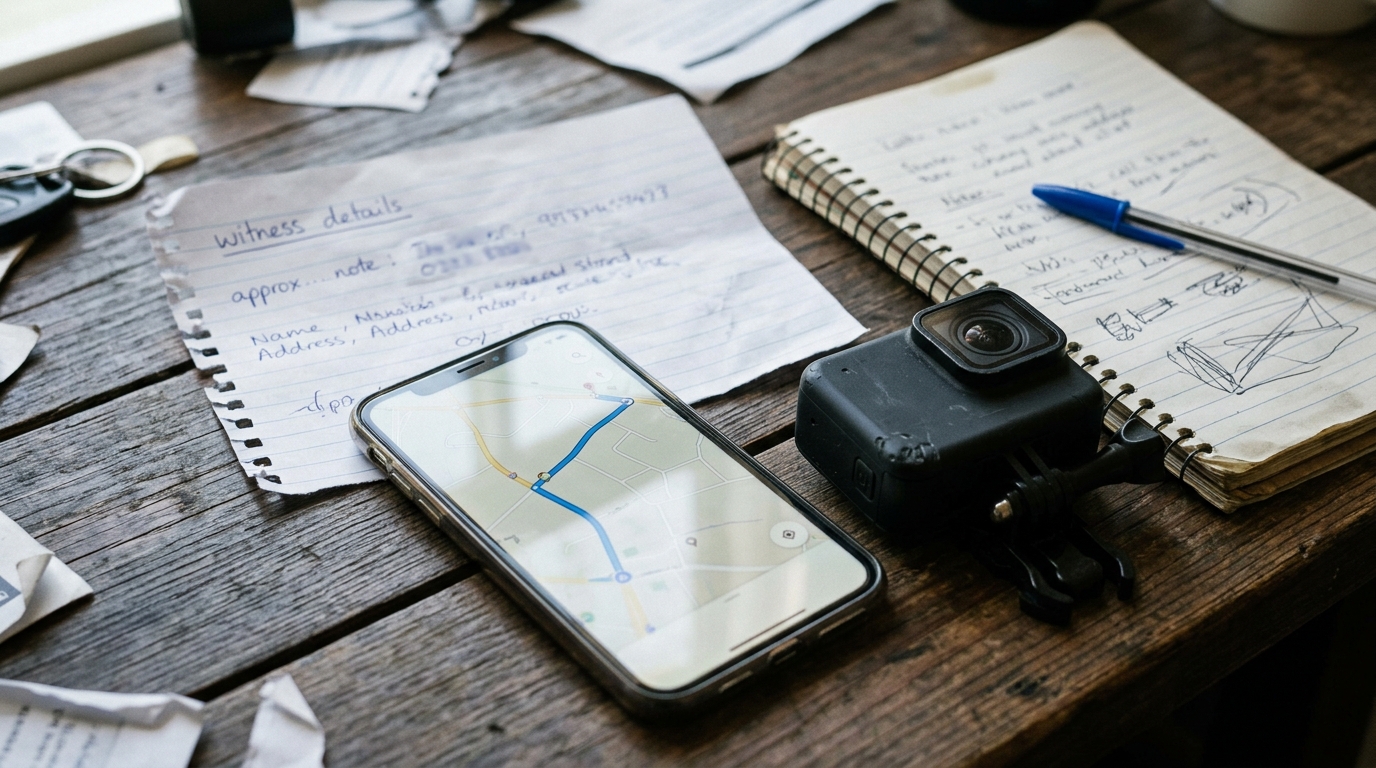
Dashcam footage, CCTV, helmet-camera recordings, mobile phone photographs and ride-app data may be lost or overwritten quickly. Save original files where possible and make a note of potential CCTV cameras near the scene. Keep receipts for travel, treatment, repair costs and other expenses. Wage slips, fit notes and a short diary can also help explain the effect of injuries on work and daily activities.
What happens after an e-scooter injury
If a claim is successful, compensation may include general damages for pain, suffering and loss of amenity. It can also include special damages for financial losses that are caused by the accident and supported by evidence. These can include loss of earnings, medical expenses, rehabilitation, travel and care costs.
Choosing the right claim route
The process will depend on where the accident happened, the injury, the people involved and the insurance arrangements. Some lower-value road-traffic injury claims in England and Wales are dealt with under a specific process. However, it is not a one-size-fits-all solution for every e-scooter accident. The free Official Injury Claim service is designed for certain minor road-traffic injuries suffered by drivers or passengers.
For a fuller explanation of the England and Wales rules for low-value road-traffic claims, read our guide to personal injury small claims reforms. Do not delay simply because you are uncertain which route applies. Evidence becomes harder to obtain as time passes, and time limits can apply.

When to seek legal advice
Early legal advice can help if liability is disputed, a serious injury has occurred, several parties may be involved or the case includes a rental operator, highway authority or suspected defect. A personal injury solicitor can assess the evidence, explain the likely process and advise on funding arrangements. No solicitor can guarantee the outcome or value of a claim.
This article provides general information rather than legal advice. The law and procedure can differ across the UK. If you have been injured in an e-scooter collision, prioritise medical care, preserve evidence and seek tailored advice based on the facts of your case.

