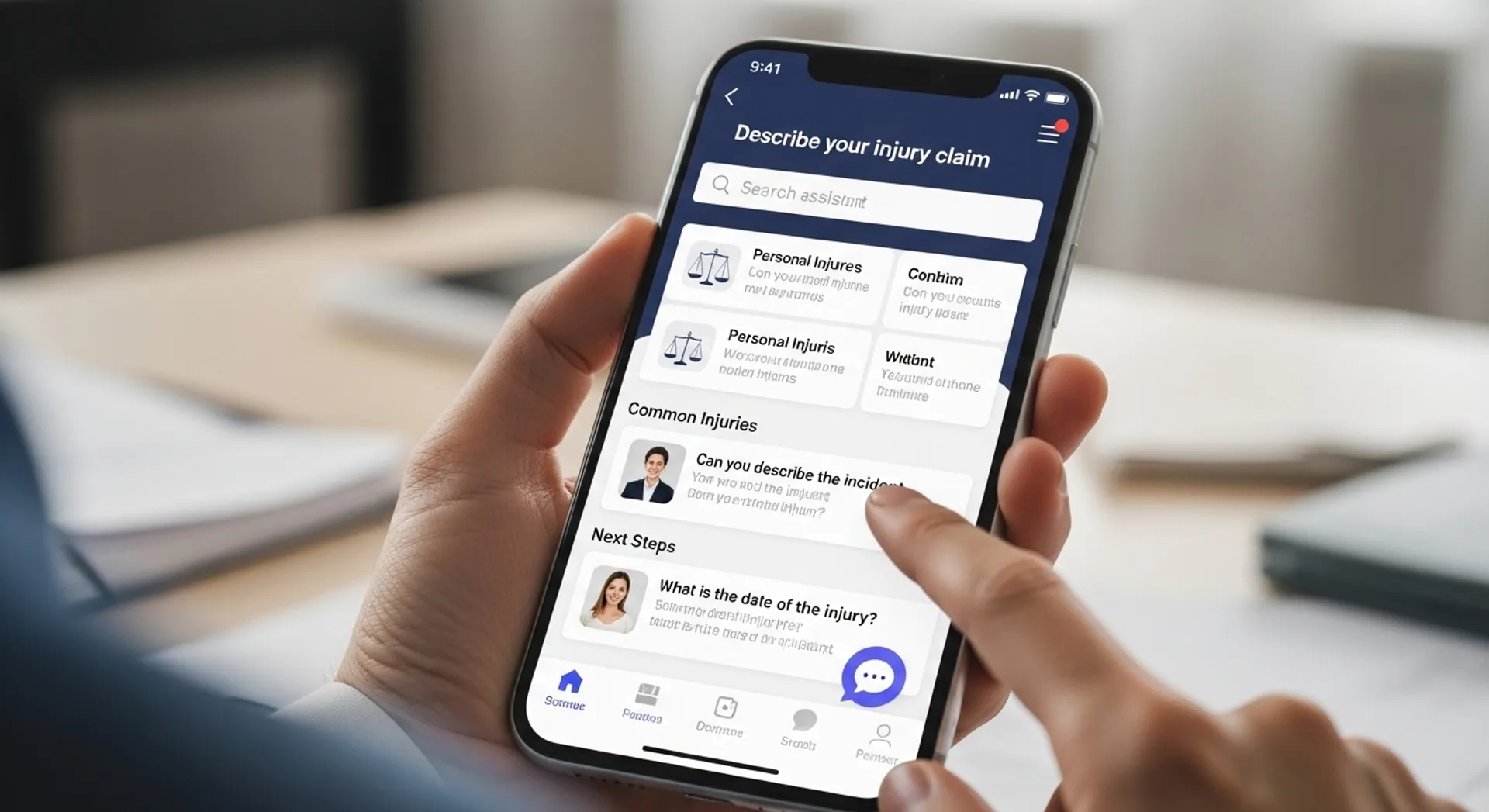


Artificial intelligence has made its way into nearly every corner of modern life — from booking holidays to writing emails. So it is no surprise that many accident victims in the UK are now turning to AI chatbots and tools to help them understand or even pursue a personal injury claim. It feels logical: AI is fast, free, and available around the clock.
But there is a significant gap between what AI can usefully do and what people assume it can do — especially when money, health, and legal rights are on the line. This guide takes an honest look at where AI adds genuine value, where it falls dangerously short, and what you should actually do if you have been injured through someone else’s fault.
What Are People Actually Using AI For in Personal Injury Cases?
Across the UK, more accident victims are experimenting with AI tools before — or sometimes instead of — speaking to a solicitor. The appeal is understandable. After an accident, you may be in pain, confused, and anxious. Typing a question into a chatbot at midnight feels far easier than waiting for a law firm to open.
Common uses include asking AI to explain legal jargon, researching whether a claim is possible, drafting letters of claim, generating timelines of events, and even asking AI to estimate compensation amounts. Some people go further, using AI-generated letters to communicate directly with insurers or employers without any professional involvement.
Where AI genuinely helps
There are real, legitimate ways that AI can support you during the early stages of a personal injury matter. These include:
- Understanding legal terminology — AI can explain what words like liability, contributory negligence, or duty of care actually mean in plain English.
- Generating questions to ask a solicitor — If you are preparing for a free initial consultation, AI can help you think through what to ask.
- Organising your account of events — Prompting an AI to help you structure a written timeline can be a useful exercise before you speak to a legal professional.
- General research on claim types — Understanding whether your situation might involve a road traffic accident claim, a workplace injury, or a public liability incident is a reasonable starting point.
Used in this limited, preparatory way, AI is a useful starting point. The problem arises when it becomes a replacement for qualified legal advice rather than a stepping stone toward it.
The Real Risks of Relying on AI for Legal Claims
The UK personal injury legal landscape has grown significantly more complex in recent years. Reforms introduced through the Civil Liability Act 2018, the introduction of the Official Injury Claim portal, and ongoing changes through 2026 have created a system where small procedural errors can be costly. AI tools, no matter how sophisticated, are not equipped to navigate this landscape reliably on your behalf.
AI does not know the current state of the law
Most AI tools are trained on data up to a certain point in time. UK personal injury law has changed repeatedly and continues to change. Whiplash tariffs were updated in May 2025, the Employment Rights Act came into force in late 2025, and the Ministry of Justice’s post-implementation review of the Whiplash Reform Programme is ongoing into spring 2026. If an AI gives you information based on outdated legal rules, you could take steps that undermine your claim without realising it.
AI cannot assess the specific facts of your case
Personal injury law is intensely fact-specific. Whether you have a viable claim depends on factors including the exact circumstances of the accident, whether liability can be established, your medical evidence, the identity and insolvency status of the defendant, whether you contributed to the accident yourself, and the limitation period that applies. An AI tool working from a brief typed description cannot weigh these factors the way a trained solicitor can. A claim it tells you is straightforward may be more complicated, or even time-barred, in reality.
Errors in AI-generated correspondence can damage your claim
Using an AI-generated letter to notify an insurer or employer of a claim sounds efficient. In practice, it is risky. A poorly worded letter of claim can inadvertently admit liability on your part, contradict medical records, or fail to include information that is legally required at that stage. Insurers and their legal teams are experienced at using early correspondence to their advantage. A letter that misrepresents your position — even unintentionally — can weaken your negotiating position significantly.
AI cannot access or interpret your actual evidence
Medical reports, CCTV footage, witness statements, employer records, and accident books all play a central role in personal injury claims. AI cannot request, obtain, or properly interpret this evidence on your behalf. It also cannot instruct independent medical experts, which is often essential in establishing the extent of your injuries and their long-term impact on your life and earnings.
The Compensation Calculation Problem
One of the most frequent misuses of AI in personal injury cases is asking it to estimate compensation. People type in their injury, the length of their recovery, and ask the AI what their claim might be worth. The figure generated can be wildly inaccurate — either so low it discourages a valid claim, or so high it creates unrealistic expectations.
How compensation is actually calculated in the UK
UK personal injury compensation has two main components. General damages cover pain, suffering, and loss of amenity — the physical and emotional impact of your injury. These are assessed using the Judicial College Guidelines, which provide brackets based on injury type and severity, and are regularly updated. Special damages cover financial losses — lost earnings, medical expenses, travel costs, care costs, and future losses.
The interaction between these two heads of loss, the impact of any contributory negligence finding, the applicability of fixed tariffs under the whiplash reforms, and whether the case falls within or outside the Official Injury Claim portal all affect the final figure. This is a calculation a solicitor makes based on your specific evidence — not something an AI can reliably produce from a brief description.
Why undervaluing your claim matters
If you accept a settlement based on an AI estimate that is lower than what you are genuinely entitled to, you cannot normally go back and claim more. Settlements are usually final. Getting the valuation right from the outset — with proper legal advice — protects you from accepting less than your injuries and losses deserve. You can read more about how the claims process works in our guide to understanding personal injury claims and seeking compensation in the UK.
Social Media, AI, and the Rise of DIY Claimants
A wider trend has emerged alongside AI: the rise of social-media-influenced DIY claiming. Videos on TikTok and YouTube explain how to file claims, what to say to insurers, and how to maximise payouts — often wildly oversimplifying the process. AI tools amplify this by generating confident-sounding responses that may contain significant errors.
Why confidence is not the same as accuracy
AI language models are designed to produce fluent, confident-sounding text. They do not flag uncertainty the way a qualified professional does. A solicitor will tell you when a point of law is unclear or when the outcome of your case is genuinely uncertain. An AI will often generate a definitive-sounding answer even when the correct answer is “it depends on the specific facts.” This false confidence is one of the most significant risks for claimants using AI without professional guidance.
Insurers are also aware of this trend. Their legal teams are experienced at identifying claimants who are unrepresented and may exploit procedural errors or incomplete correspondence. Having a qualified solicitor removes this vulnerability entirely.

What You Should Do Instead
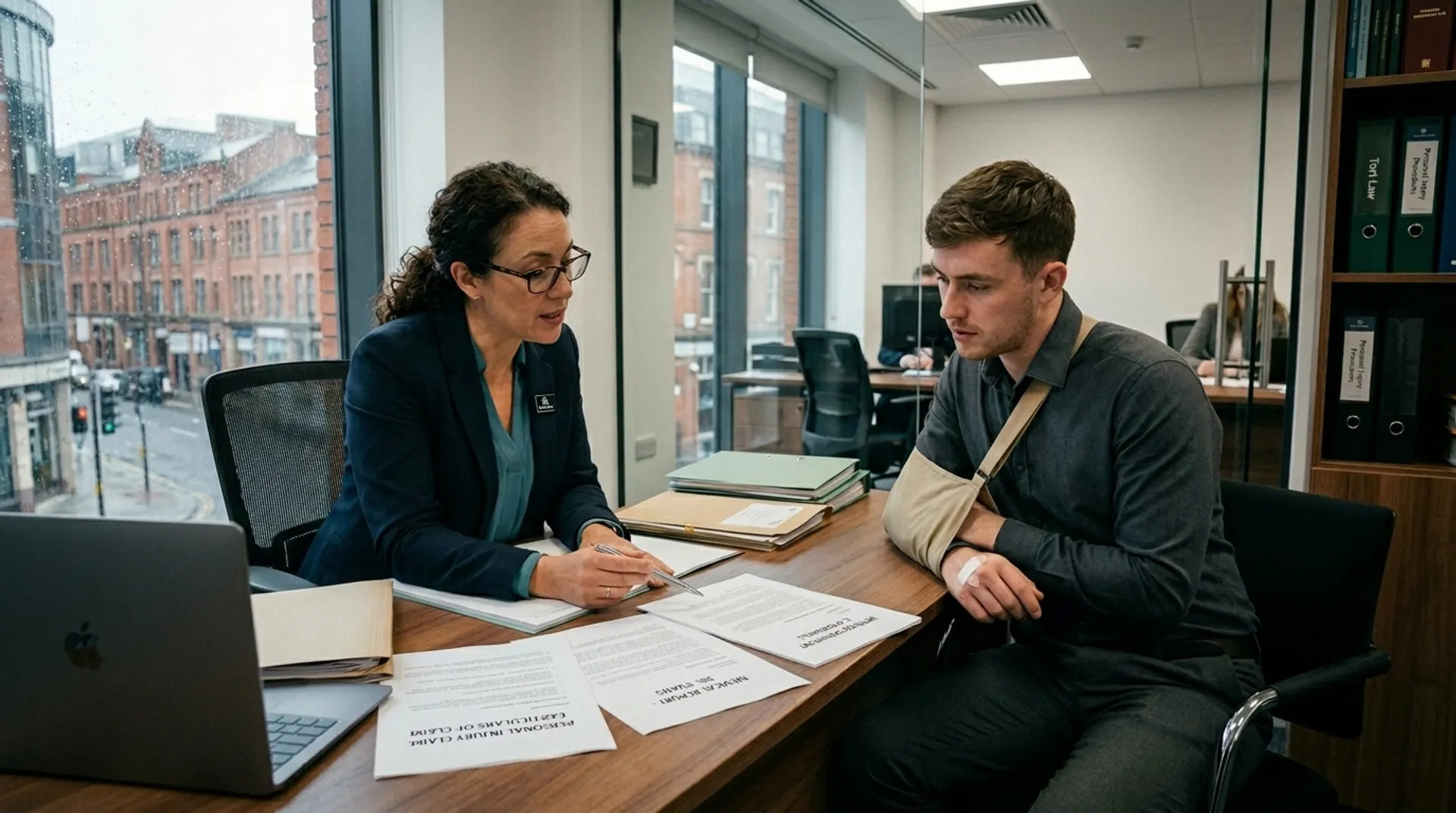
The good news is that accessing qualified legal help in the UK is not as costly or complicated as many people fear. The no win no fee system — formally known as a Conditional Fee Agreement — means you can instruct an experienced personal injury solicitor without paying any upfront fees. If your claim is unsuccessful, you pay nothing. If you win, your solicitor’s fees are recovered from the other side or covered by a small success fee deducted from your compensation.
Use AI to prepare, then speak to a solicitor
There is nothing wrong with using an AI tool to help you understand general concepts, prepare questions, or organise your thoughts before an initial consultation. In fact, this is arguably the best use of AI in a legal context. Many solicitors offer a free initial consultation — using AI to make the most of that conversation is sensible.
Choose a specialist, not a generalist
Personal injury law is a specialist field. When choosing legal representation, look for a solicitor or firm that focuses specifically on personal injury and compensation claims rather than a general practice that handles everything from conveyancing to employment disputes. Specialist knowledge matters enormously when cases involve complex medical evidence, disputed liability, or significant long-term losses. Our guide on how to choose the right injury attorney for your compensation claim walks through exactly what to look for.
Act within the time limits
One area where AI can genuinely mislead you is around limitation periods. In most personal injury cases, you have three years from the date of the accident to begin legal proceedings. There are exceptions — for children, for cases involving gradual industrial disease, and for cases where the injury was not immediately apparent — but the general rule is strict. If you spend months relying on AI assistance without taking formal legal steps, you risk losing the right to claim entirely. Speaking to a solicitor early protects you from this outcome.
The Bottom Line on AI and Personal Injury Claims
AI has real value as an educational and organisational tool. It can help you understand the landscape, prepare for professional conversations, and navigate unfamiliar terminology. What it cannot do is replace the judgement, expertise, and professional accountability of a qualified personal injury solicitor.
The UK personal injury system in 2026 is more complex, more reform-driven, and more challenging to navigate than at any point in the recent past. The stakes — your health, your financial recovery, and your future — are too high to risk on a technology that cannot be held professionally accountable for its output.
If you have been injured through someone else’s fault, use AI to inform yourself, then take the next step and speak to a specialist. A no win no fee arrangement means there is no financial barrier to getting the professional help your claim deserves. For more on the types of claims available and what to expect from the process, visit our guide to workplace injury claims and compensation in the UK.

